Describe Three Abiotic Factors That Influence This Ecosystem
Green plants and photosynthetic bacteria need light to manufacture their food. Add your answer and earn points.
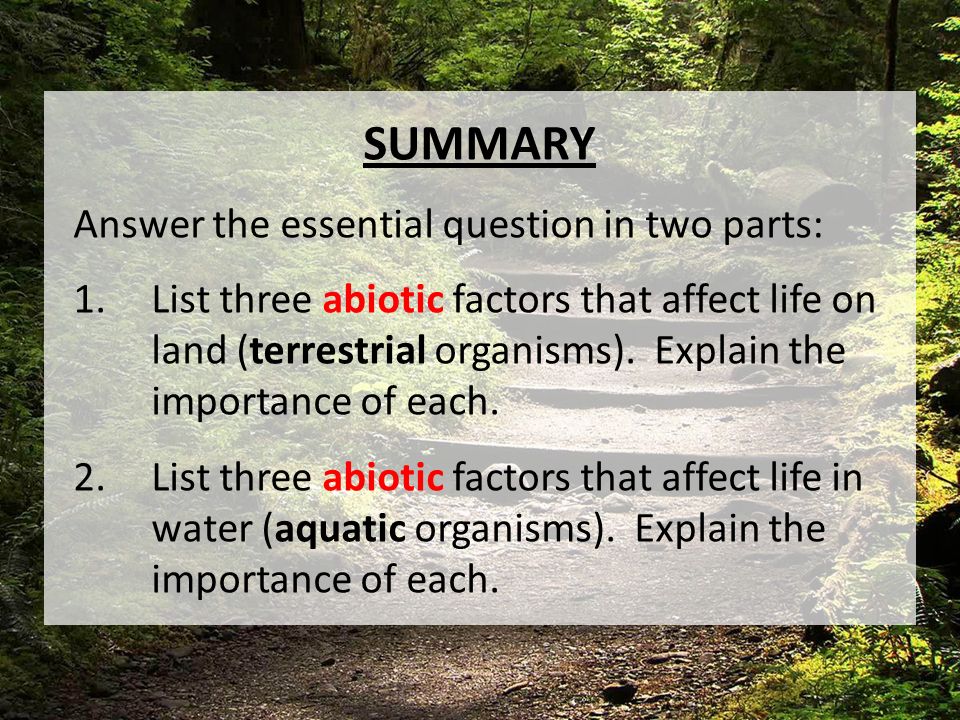
Introduction To Ecology Biotic And Abiotic Factors Ppt Download
Imagine that you are a scientist who has discovered a new object.
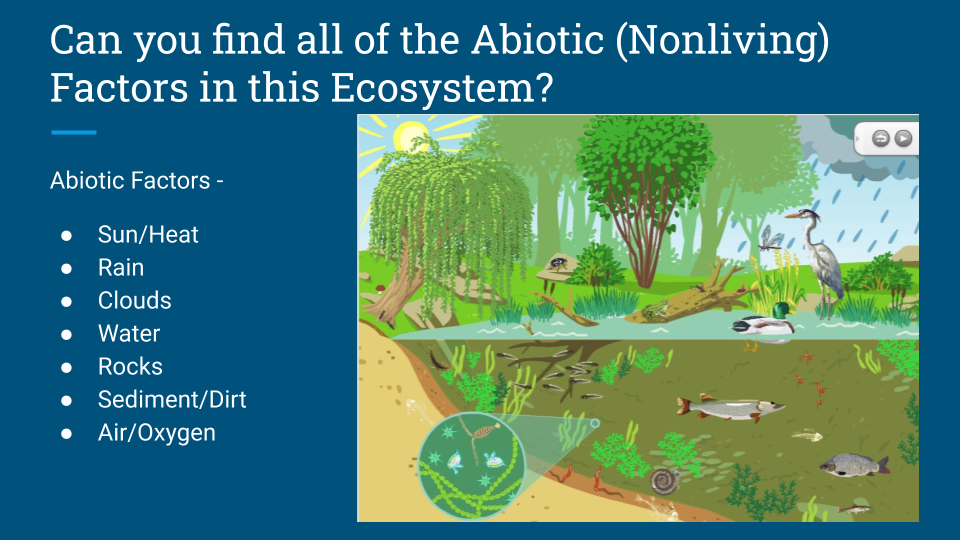
. Abiotic variables found in terrestrial ecosystems can include things like rain wind temperature altitude soil pollution nutrients pH types. For example a houseplant growing on a windowsill may be considered to be a small ecosystem. - Rocks minerals soil water air temperature climate polar.
As an example we can look at bison in Yellowstone National Park. Abiotic factors influence other abiotic factors. Consider what you know about biotic and abiotic factors in an ecosystem.
You want to find out if the object is biotic or abiotic. Rocks that created the highlands Planet Earth Mountain. Animals depend on plants for food.
In a terrestrial ecosystem examples might include temperature light and water. Biotic factors depend on abiotic factors for survival and reproduction. 11 What are the three pressures that lead to biodiversity.
Mountains- Provide a safe barrier for. Describe the abiotic and biotic factors in an ecosystem. It also protects the animals that live here because there are only a handful of predators that could live in the elevation.
Planet Earth Video Questions. Describe the location you chose to observe Research the term abiotic and discuss abiotic factors that influence the ecosystem. 14 How do biotic factors.
13 What are the three key factors that influence species richness in an ecosystem. In a marine ecosystem abiotic factors would include salinity and ocean currents. 3 pts each ECOSYSTEM THREE ABIOTIC FACTORS Ethiopian Highlands Ethiopan HIghlands.
A biotic factors are the non living parts of the environment that can often have a major influence on living organisms They include water sunlight O 2 Soil and temperature 1. Examples of abiotic factors include sunlight water air humidity pH temperature salinity precipitation altitude type of soil minerals wind dissolved oxygen mineral nutrients present in the soil air and water etc. Describe three abiotic factors that influence this ecosystem Get the answers you need now.
Water - The makeup of the water how it moves and how available it is. Parasites consumers prey predators etc. Making the species in the himalayas more rare than the species found in common places.
Describe three abiotic factors that influence the following ecosystems. 10 How does biodiversity affect the stability of an ecosystem. Abiotic and biotic factors work together to create a unique ecosystem.
They have to compete with elk and other. What populations did you observe or have observed in the past in the ecosystem. The following are examples of abiotic factors within an ecosystem.
With a volume of around 1807x106 km3 it makes up 13 of the world total ocean water. Biotic factors are living or once-living organisms in the ecosystem such as food disease competition and predators. Biotic factors include the plant the bacteria in the soil and the care a person takes to keep the plant alive.
Are the biotic factors of an ecosystem. These include factors such as wind water sunlight soil temperature and humidity. Learn more about abiotic factors with this curated resource collection.
Describe two adaptations of the Gelada Baboon. Nutrients are mostly obtained from the soil. Abiotic factors include light water air the temperature the soil and the.
Water H 2 0 very important abiotic factor it is often said that water if life all living organisms need. Elevation- S upports biodiversity because most species cant live in high elevations. Abiotic factors have the potential to affect all living organisms with respect to their growth reproduction and survival.
What is one of the reasons that nutrients in a vegetable patch might be considered abiotic. Without abiotic factors. Abiotic factors are non-living physical and chemical elements in the ecosystem such as sunlight temperature soil water and oxygen.
Biotic Factors by Type. It provides a habitat for both prey and predators living in the arctic ocean Ozone Layer -One of the most crucial abiotic factors of the Arctic Ocean ecosystem lies above it. Light affects living things in terms of intensity quality and duration.
These are components like minerals light heat rocks and water. Any ecosystem no matter how larger or small contains both biotic and abiotic factors. Water -Water is one the most important abiotic factors in the Arctic Ocean.
The sun is the main source of energy to all life on earth. The amount and type of each abiotic factor determines what life can survive in that ecosystem. Ashleyy4576 ashleyy4576 05042018 Biology High School answered Describe three abiotic factors that influence this ecosystem 1 See answer Advertisement Advertisement ashleyy4576 is waiting for your help.
List three abiotic factors that influence the Ethiopian Highland ecosystem. Abiotic factors are the non-living components of the ecosystem. Light intensity and quality affects photosynthesis flowering and germination of plants while in animals affects migration.
Sunlight - The amount and intensity of regular sunlight exposure. Biotic factors are the living parts of the ecosystem such as plants animals insects fungi and bacteria. Or known as the Roof of Africa is form from a huge dome of rock 500 miles wide that has been forced up by the continuous emerging to lava from the earths core.
In addition they have profound impacts on the variety and abundance of life in an ecosystem whether on land or in water. What components of a food web or food chain eg producers consumers decomposers etc did. Sunlight rainfall oxygen nitrogen carbohydrates protein etc.
12 What factors affect biodiversity Why do wetlands have a high level of biodiversity. 9 Are the most important three factors in ecosystem. Abiotic factors can either be non-living chemical and physical parts of the environment.
Abiotic factors are the non-living parts of the ecosystem which influence the size and composition of the living parts. Adapt to ability changes in the environment. There are five main abiotic factors that are important to all ecosystems.
Describe the biological communities that exist. Are the abiotic factors.

A Biotic And Abiotic Factors Important For Seed Dispersal Download Scientific Diagram

Pdf Abiotic Factors
Abiotic Vs Biotic Factors In An Ecosystem James River Association

Comments
Post a Comment